


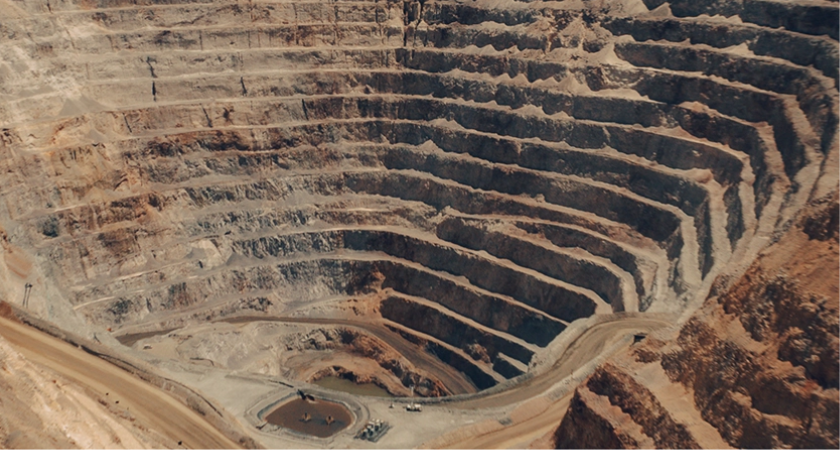
At the successful restart of the Cairn Hill Magnetite Mine, the cut back was based on a life of mine plan that depended on efficient grade control, minimal dilution, and consistent export ship grades. The mine had initially closed due to dropping iron price which left a legacy of a low overburden strip and a focus on high-grade, therefore causing the re-start up life of mine plan to have a high pre strip with low-grade ore. It was challenging to ensure enough trains of ore made it to fill the first ship at the same time of running a mine on a very tight budget without grade control assays.
The reliance on a block model based on the resource drill out together with first principal geology allowed the small geology team to implement strict controls on grade control to ensure the best product was mined, stockpiled, blended and railed to the Port.
Blast hole logging and flitch mapping together with the Munsell soil colour chart allowed verification of the block model. Whilst using a magnetic susceptibility meter for Iron grade estimates on crushing and grinding samples together with visual silica grade helped successfully load the first shipment on target for iron grade and within quality specifications.
Sparing use of laboratory XRF samples helped to build a magnetic susceptibility calibration chart which increased our confidence in using the magnetic susceptibility meter on blast holes and to define ore and waste contacts and differentiate high grade, low grade, and mineralised waste.
This initial period of low budget grade control was successful until an onsite XRF was in place and it not only ensured the critical first shipment was on grade but it also forced the team to lean into the existing data, understand the orebody better and help make key mining decisions that minimised dilution.


